
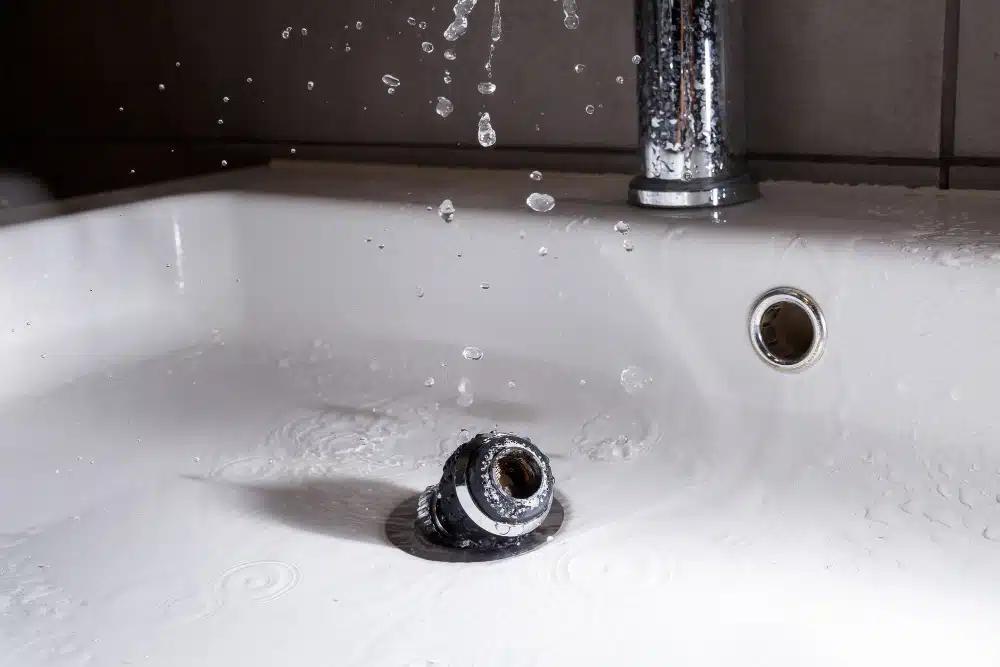
You’re brushing your teeth before bed when you hear it… that telltale drip, drip, drip coming from underneath your bathroom sink. Sound familiar?
That innocent little drip might seem harmless but here’s the thing, what starts as a few drops can quickly turn into your worst nightmare. We’re talking water damage, mould growth, higher water bills and potential damage that’ll have you reaching for your wallet in ways you never imagined. Unfortunately, leaks don’t always announce themselves with obvious puddles. Sometimes water pools behind cabinets, slowly rotting timber or seeping into walls where you can’t see it. By the time you notice that musty smell or spot those telltale water stains, the damage is often already done.
But thankfully most basin leaks come down to a handful of common culprits, and with a bit of detective work, you can often catch them before they become expensive disasters.
What you’ll need for your investigation
- Flashlight or phone torch
- Bucket and old towels
- Adjustable wrench
- Your detective hat (optional, but recommended!)
- Time needed: 15-30 minutes for diagnosis, 30-60 minutes for basic fixes
Understanding Your Basin’s Anatomy
Your bathroom sink isn’t just a bowl with a tap instead it’s actually a clever network of parts working together. But when one part fails, that’s when the trouble starts.
Here’s what’s happening under there:
- Supply lines bring fresh water in
- The drain and P-trap carry used water away
- Rubber washers and gaskets keep everything sealed tight
- The drain flange connects your basin to the drainage system
- Various nuts and joints hold it all together
And the following are some common leak issues.
1. Worn-Out Gaskets (The Most Common Culprit)
Those rubber or silicone seals don’t last forever and after years of doing their job, they crack, shrink or just give up entirely. It’s like the elastic in your favourite old tracksuit pants, eventually, they just can’t hold it together anymore.
2. Loose Connections
Sometimes it’s as simple as a joint that’s worked itself loose over time. Water has a sneaky way of finding even the tiniest gap.
3. Damaged Pipes or Basin
Heavy items dropped, corrosion from years of use or just plain old age can create cracks and weak spots. Even hairline cracks in your basin can cause surprising amounts of damage.
4. Blocked Drains Creating Chaos
Here’s one that catches people off guard, where blockages can create backpressure that forces water out at the weakest point. Essentially the pressure has to go somewhere.

Your Step by Step Leak Detective Guide
Step 1: Safety First
Turn off the water supply valves under the sink. Trust us on this one, as nobody wants an unexpected shower while they’re investigating.
Step 2: The Faucet Check
Start at the top and work your way down. Water pooling around the base of your taps usually means worn washers or the O-rings need replacing.
Step 3: Feel Your Way Along the Supply Lines
Run your hands along those water supply lines, and even a tiny trickle will leave telltale dampness. If you find wet spots, the connections likely need tightening or the lines need replacing.
Step 4: Investigate the P-Trap
That curved pipe under your sink (it looks like a sideways “P”) is a common trouble spot. And you should look for:
- Visible cracks or corrosion
- Loose joints where sections connect
- Water stains or mineral buildup
Step 5: Test the Drain Seal
Fill your basin with water, then pull the plug and watch underneath as it drains. Spots any drips? If so, your drain seal probably needs fresh plumber’s putty or complete replacement.
Fixes You Can Tackle Yourself
Tightening loose connections. Often a gentle quarter turn with an adjustable wrench is all you need, but don’t overdo it as you want it snug, not stripped threads.
Replacing washers and O-Rings are usually cheap fixes that make a big difference. Take the old ones to your hardware store to ensure you get the right size.
Clearing minor clogs can sometimes solve the leak problem entirely.
When to Call in the Cavalry
DIY has its limits and knowing when you’re out of your depth can save you thousands. There’s no shame in calling for backup and sometimes the smart money is on getting it done right the first time. So call in a professional plumber if:
- The leak seems to be coming from inside walls
- You’ve tried the basics but can’t locate the source
- You’re dealing with corroded or damaged pipes
- Water damage is already visible
- You’re simply not comfortable doing the work yourself
Remember though that every major water disaster started with a small leak that someone meant to “get around to fixing”. Don’t be that someone. If you’ve got a persistent leak that’s driving you crazy. Then simply call us for quick and efficient plumbing solutions.