
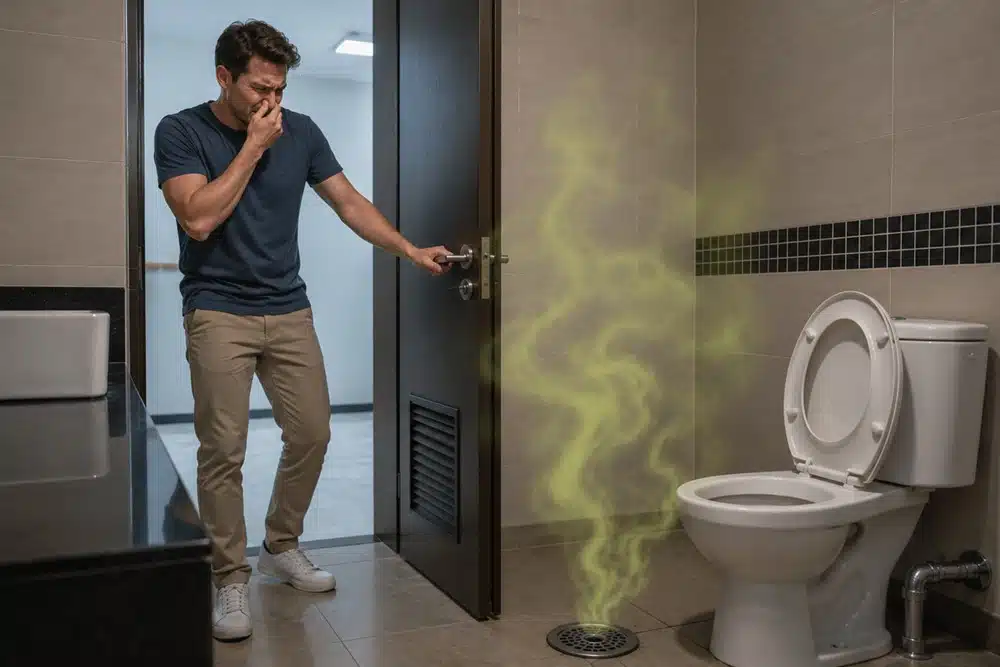
That rotten egg smell hitting you as you walk into the bathroom or worse, the kitchen! This is one of those household problems you can’t easily ignore. It’s unpleasant, it catches you off guard and it’s usually a sign that something in your plumbing system needs attention.
Sewer gas odours can show up anywhere and sometimes the cause is simple. Other times it points to a hidden fault that requires professional diagnosis. Either way, the sooner you track down the source, the better, because these smells tend not to resolve on their own.
What Is It, Exactly?
Sewer gas is produced as waste breaks down inside drainage and sewer systems. It’s a mix of gases including methane, hydrogen sulphide, carbon dioxide and ammonia. The culprit behind that distinctive rotten egg smell is hydrogen sulphide even in small concentrations, it’s hard to miss.
Modern plumbing is designed to keep these gases contained with water filled traps beneath your sinks, showers and floor drains acting as barriers, whilst vent pipes direct gases safely up and out through the roof. When any part of that system fails or is compromised, sewer gas can find its way back into your living spaces.
The Most Likely Causes
Dry drain traps are one of the most common culprits. That curved section of pipe under your sink or shower holds water permanently to create a gas seal. If a drain hasn’t been used for a while the water can evaporate and leave the drain unprotected. Running water back into the drain often fixes it quickly.
A failing toilet seal is another frequent cause which over time can crack or shrink, allowing gas to escape around the base. If the smell is strongest near your toilet, especially after flushing, the seal is worth investigating.
Blocked vent pipes can also be to blame and these pipes regulate pressure in your drainage system and channel gases outside. Debris, leaves or nesting animals can obstruct them, forcing gases back into the home rather than out through the roof.
Cracked or damaged pipes are the more serious end of the spectrum as faults such as this can develop underground, behind walls or beneath concrete slabs. The kind of places you simply can’t see without specialised equipment. Ageing infrastructure and tree root intrusion are common contributors to hidden drainage issues.
How to Track Down the Source
Start with the basics and pay attention to where the smell is strongest and whether it appears at particular times, whether it’s first thing in the morning, after heavy rain or during hot weather. These details can help narrow things down considerably.
Then check the drains that aren’t used regularly and run water through them. Inspect around the base of your toilets, and if the smell is coming from outside (near inspection points, drain connections or sections of the yard) and look for damp patches or unusually green grass, which can indicate an underground leak.
Some sewer gas issues are easy fixes. But if the smell keeps coming back after basic troubleshooting, that’s a clear signal something more is going on beneath the surface. Professional plumbers can locate faults invisible to the naked eye and catching these problems early nearly always means a simpler, less costly repair. A cracked pipe left unaddressed has a habit of becoming a much bigger job down the track.